If you want a faction pairing that rewards planning over raw aggression, look no further than gnomes and golems in Goblins and Gunslingers. These two factions are built to work as one machine, and they even count as a single faction at the deck builder: every Gnome creature flips into its paired Golem the moment you commit a spell, and that flip is where the real damage, draw, and tempo come from. Get the sequencing right and a quiet board turns into a forge that hammers your opponent flat. Get it wrong and you cast too early, waste your triggers, and run out of gas. This guide walks you through the Flip engine, the cards that drive it, and how to fund the whole operation with the game's two-resource economy.
How the Flip engine actually works
The Flip mechanic is the signature trick of the Gnomes engineering faction. Every Gnome creature is paired with a Golem, and the trigger is a spell: when you commit any spell, every Gnome you control flips into its Golem counterpart in the same lane, carrying the same damage and the same attachments. Two things happen in that moment. First, the Gnome's Flip effect resolves as it transforms. Second, you now have a Golem on the board, and a Flip Spell can fire its Flip-Charged effect. The flip is not permanent, either: your opponent's second spell after the flip turns the Golem back into the Gnome.
That means a single spell can pay you several times over if the board is ready for it. Take Cogwheel Scout, a common Gnome whose Flip gives it +1 Attack until end of turn, or Gadget Gremlin, which carries High Noon to draw when played and a Flip that draws another card. The flip itself is automatic, so the decision point is the spell. You choose when the tempo swing is worth more than leaving the Gnomes on the board.
The value Gnomes that fuel the machine
Before you can detonate, you need fuel. The common and uncommon Gnomes exist to generate cards, gold, and cost reduction so your bigger plays come online sooner.
- Tinker Imp (common) Flips to reduce the cost of your next card this turn by 1 mana, perfect right before a heavy drop.
- Steam Rat (common) has Gold Rush on entry and Flips to gain 1 additional gold, quietly padding your treasury.
- Gadget Gremlin (common) draws with High Noon and draws again on Flip, keeping your hand full.
- Smoke Canister (common) makes Cover Tokens and Flips to place an additional one, buying you time behind blockers.
- Blast Furnace Bill (uncommon) swings twice with Double Barrel and Flips for 1 gold.
- Alchemical Renegade (uncommon) strikes first with Quickdraw and Flips to deal 2 damage to a target enemy creature, doubling as removal.
You can browse every one of these in the full Goblins and Gunslingers card gallery to see their exact stats and frames before you build.
Sequencing Flips for maximum value
The core skill with gnomes and golems is order of operations. Every Gnome on your side flips on the same spell, so you script the turn around that cast. A clean line might look like this: drop Tinker Imp and Gadget Gremlin, commit a cheap spell so the Imp's Flip shaves a mana off your next play while the Gremlin's Flip refills your hand, then deploy the discounted threat.
Your legendaries are the payoff. Grandmaster Tinker Brixx has Double Barrel and Flips to give all friendly Gnome creatures +1/+1 until end of turn, so you want him flipping when your board is widest, not when it is one creature. Archinventor Helix Vale also has Double Barrel and Flips to deal 2 damage straight to the opponent's hero, a reliable closer. Hold your spell for the turn they swing the game, not the turn they merely look good.
On the Golem side, the Flip-Charged effects are your removal and reach, and they fire when a Flip Spell flips your Golems. Iron Rail Titan destroys a target creature with 2 or less Defense when flipped and buffs your other Golems, so detonate into a board where that destroy actually matters. Catacomb Engine Atlas carries Overshot plus its own Flip-Charged effect, meaning excess attack damage spills onward once it is online.
The single biggest swing in the archetype is Grand Detonation, a Flip Spell that flips all your friendly Golems at once, and each Golem flipped deals 3 damage to every enemy creature. The trap is firing it on an empty board. Build up your Gnomes first, flip them with a spell so they stand as Golems, then detonate when a wide flip translates into a board wipe.
Off-Board pieces and the charged turn
Some of your strongest gnomes and golems never enter combat. They sit Off-Board and warp the rules. Inventor Madame Zilch makes your Gnomes cost 1 less mana the turn after you pass your Action Phase, rewarding a patient setup turn. Forge Marshal Ingra gives you a reward at the start of your turn if you played no cards last turn, a deliberately "charged" turn. Ironwall Rampart lets you pay 1 Gold once per turn to give all friendly Golems defense, turning your forge into a wall.
Funding it all with Mana and Gold
The flip engine lives and dies on resources, and Goblins and Gunslingers runs two of them. If you are new to the split, read our breakdown of how Mana and Gold differ first. Mana ramps every turn and fully refills, so it powers your tempo. Gold refreshes each turn to 1 plus 1 for every instance of damage you landed on the enemy hero the turn before, and unspent Gold does not carry over.
That is why Gold-generating Gnomes matter so much. Steam Rat and Blast Furnace Bill gain gold on Flip, and Helix Vale chipping the hero earns you even more gold to spend on Ironwall Rampart. Mana drops your Gnomes; Gold keeps your Golems standing.
Building the deck
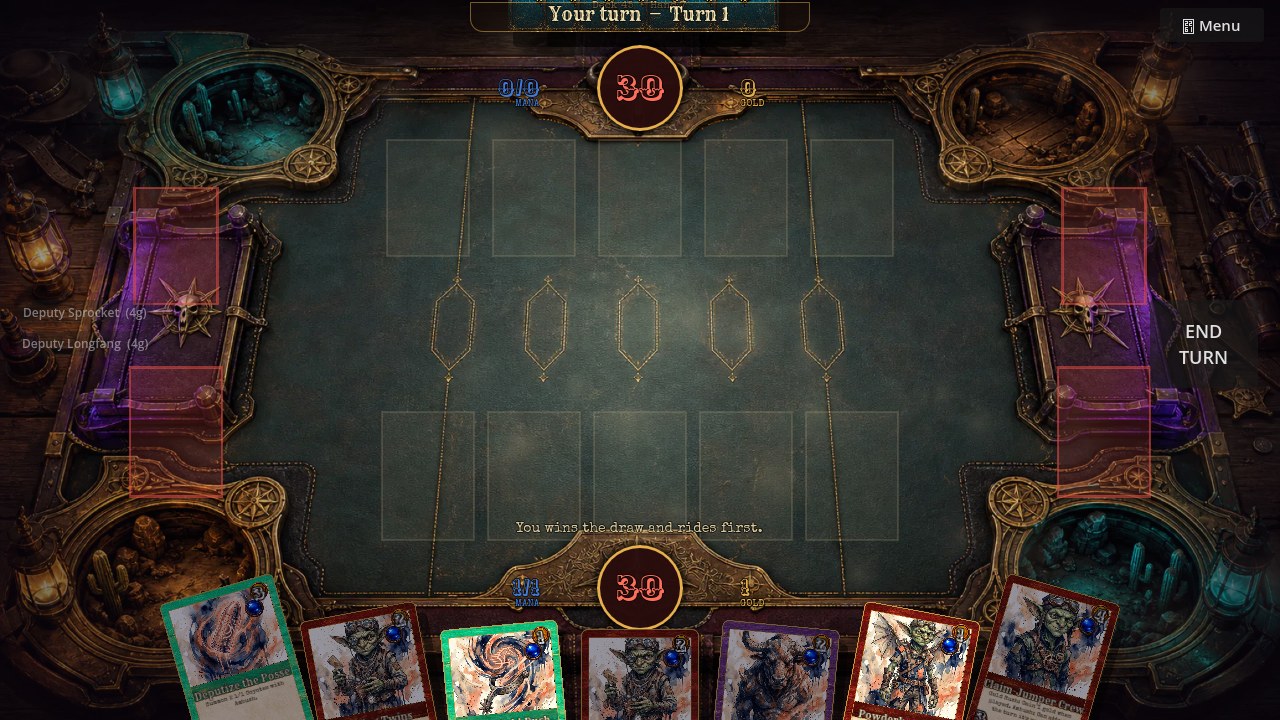
Decks run 52 cards with a max of two main factions plus your two Deputies, no more than two copies of any card, and you draw 7 to open. Gnomes and Golems count as one faction, so the pairing still leaves you a second main faction, plus room for a Beast splash since Beasts are neutral. Lean on the 5 Middle lanes for your attackers and use the 2 High-Rise lanes to keep a key Gnome concealed and untargetable until it attacks. If any keyword here is new, our keyword glossary covers Flip, Flip-Charged, Overshot, and the rest. The full rules walkthrough shows the turn structure in action.
Ready to build your forge?
The Flip engine clicks the moment you stop casting on instinct and start scripting it. Jump into Goblins and Gunslingers free in your browser or on Steam, build a gnomes and golems deck in the deck builder, and test your lines against the AI on Greenhorn before you take it online.
Open the Online Outpost to put the forge to work.